Who is it for
Indications (ESC 2024):
- a descending aortic aneurysm with a diameter of ≥ 55 mm (with anatomy suitable for TEVAR; for open surgery the threshold is ≥ 60 mm);
- lower thresholds with genetic aortic diseases, rapid growth (> 3 mm/year), symptoms (back pain, hoarseness from pressure on the laryngeal nerve) or a saccular aneurysm;
- other diseases of the descending aorta treated with the same technique: complicated type B dissection (reduced blood supply to organs, widening, pain not responding to treatment), intramural haematoma, penetrating atherosclerotic ulcer, traumatic aortic injury, false aneurysm (pseudoaneurysm).
Anatomical requirements: sufficiently long and "healthy" segments of aorta above and below the aneurysm (landing zones, usually ≥ 20 mm), and iliac and femoral arteries wide enough to allow the system to be introduced. When the landing zone covers the origin of the left subclavian artery, this artery is first rerouted (carotid-subclavian bypass) or a branched stent graft is used.
What it involves
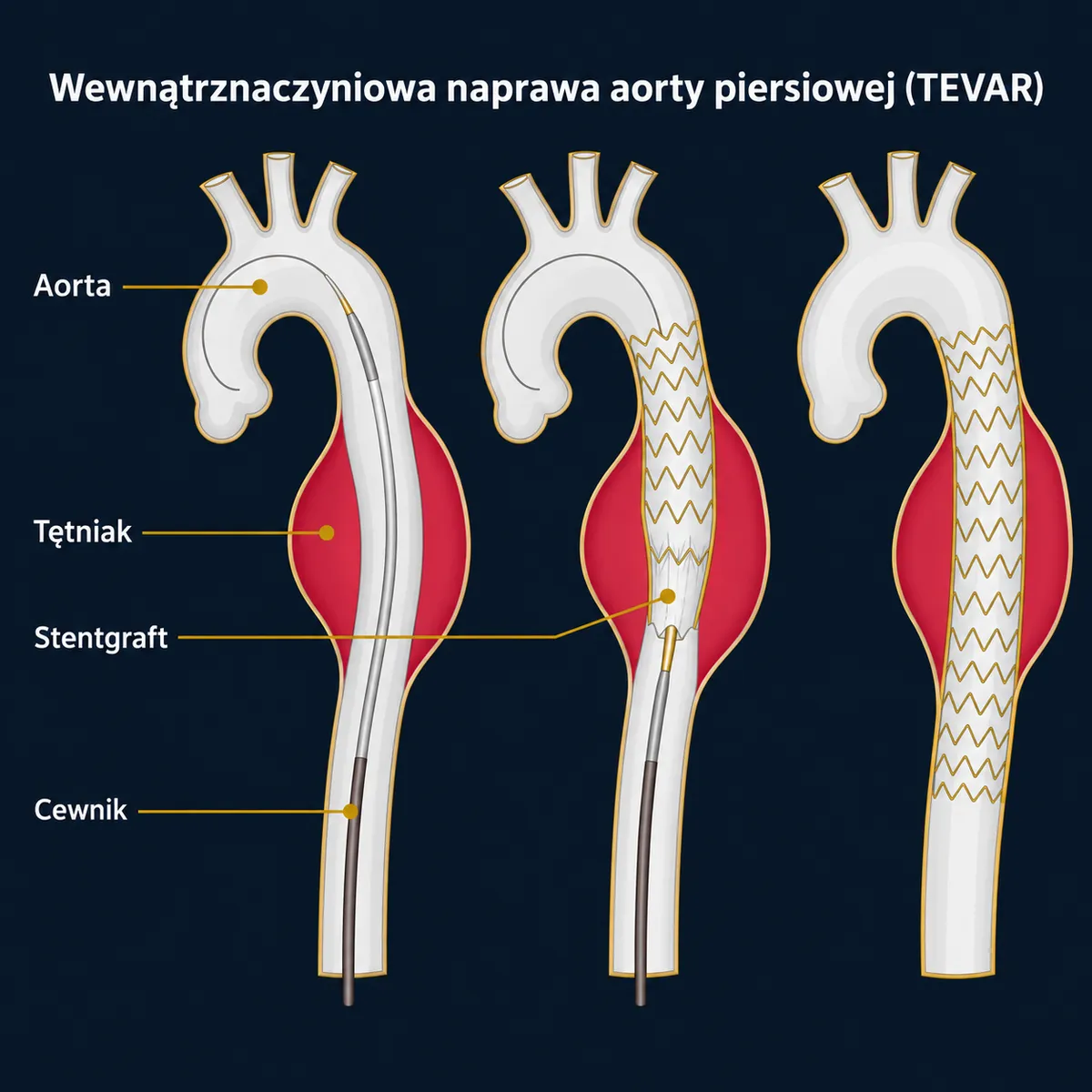
Through a puncture or a small incision in the femoral artery in the groin, a folded stent graft is passed into the aorta and, under fluoroscopy guidance, expanded so that it seals the aorta above and below the aneurysm. From then on blood flows through the graft, and the excluded aneurysm sac shrinks over time or remains stable. The procedure is performed by a team of cardiac or vascular surgeons in a hybrid operating room; when a long segment of aorta is to be covered, a cerebrospinal fluid drain is placed before the procedure to reduce the risk of spinal cord ischaemia.
What to expect
Assessment: CT angiography of the whole aorta including the arterial access routes (planning the length and diameter of the stent graft to the millimetre), echocardiography, kidney function assessment (contrast), coronary angiography or coronary CT angiography in patients with risk factors.
The procedure: general or regional anaesthesia, 1–3 hours; checked during the procedure with angiography. One day in intensive care (monitoring of leg function and blood pressure — deliberately kept higher to protect the spinal cord). Typical hospital stay: 3–6 days for a planned procedure.
Recovery
- Return to normal activity within 1–2 weeks; the groin heals within a few days; there is no chest wound.
- Blood pressure control — as with any aortic disease; treatment is set by your doctor.
- Usually aspirin and a statin for life (atherosclerotic disease of the aorta); anticoagulation only for other reasons.
- Imaging follow-up is lifelong: CT angiography at 1 month, at 12 months, then every year (if the picture is stable, the intervals can be extended and some check-ups replaced with MRI or ultrasound). The aim is to detect leaks (endoleak), migration of the stent graft or enlargement of the sac, which sometimes require an additional procedure.
Risks and alternatives
As a guide, for planned TEVAR: 30-day mortality 2–5%; stroke 2–4% (more often when the aortic arch is manipulated); spinal cord ischaemia with temporary or permanent weakness of the legs 2–5% (the risk rises with the length of aorta covered, after previous abdominal aortic surgery and when the subclavian artery is covered without revascularisation); access-site blood vessel complications 3–5%; acute kidney injury after contrast; leak (endoleak) during follow-up 10–20%, some of which require an additional procedure; re-intervention within 5 years in about 10–20% of patients — this is the price of less trauma compared with open surgery, whose result is more durable but whose early risk is considerably higher.
Alternatives: observation below the thresholds with check-ups every 6–12 months; open surgery (replacement of the descending aorta through a thoracotomy with cardiopulmonary bypass) — in young patients with connective tissue diseases, in whom a stent graft holds poorly, and when the anatomy rules out TEVAR; performed in specialist referral centres.
More on how the choice between surgery and a transcatheter procedure is made →
Questions
Will the stent graft ever need replacing?
It has no set "expiry date"; however, it does require lifelong check-ups, because the aorta around it can change.
Can I have an MRI scan after TEVAR?
Most modern stent grafts are MR-conditional; the documentation of the specific implant is what counts.
Why is the risk of leg weakness mentioned before the procedure?
Because the spinal cord is supplied with blood by arteries branching off the descending aorta, which the stent graft covers. The risk is reduced by cerebrospinal fluid drainage, keeping blood pressure higher and staging the procedures; even so, it cannot be eliminated.
My aneurysm is 50 mm — is that an indication already?
Usually not, unless it is growing quickly, causing pain, or there is a genetic condition. Until the 55 mm threshold, imaging follow-up and blood pressure treatment are recommended.
Is TEVAR performed in emergencies?
Yes — in aneurysm rupture, aortic injury and complicated type B dissection it is the method of choice, provided the anatomy allows.