Who it is for
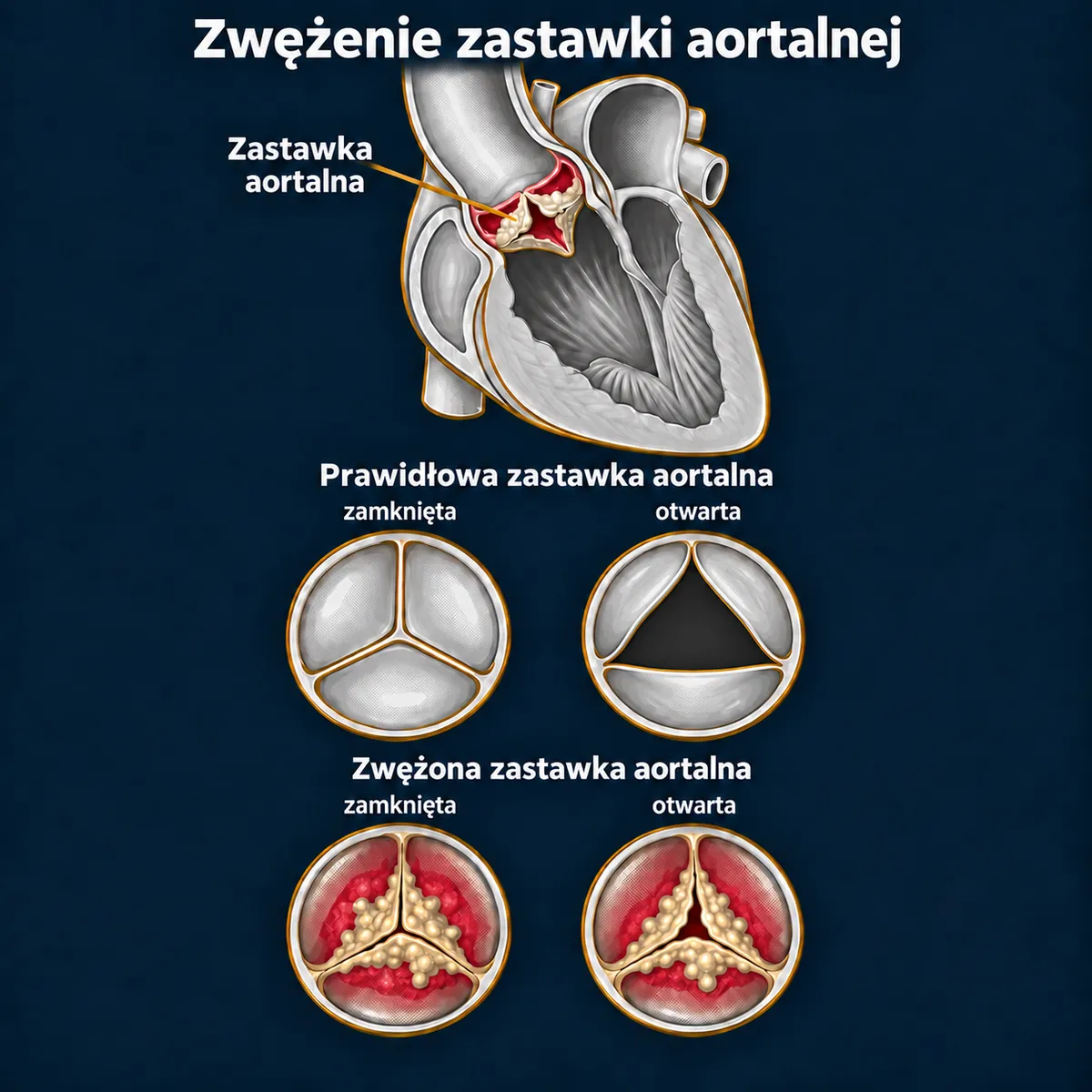
Surgery is performed for severe stenosis. On echocardiography this usually means: a valve area ≤ 1.0 cm², a mean gradient ≥ 40 mmHg or a peak flow velocity ≥ 4.0 m/s. According to the 2025 ESC/EACTS guidelines, the following are eligible for procedural treatment:
- every patient with severe stenosis and symptoms — breathlessness on exertion, chest pain, near-fainting or fainting; once symptoms appear, the outlook without treatment is poor (median survival 2–3 years);
- patients without symptoms but with reduced left ventricular function, an abnormal exercise test result, very severe stenosis or rapid progression of the disease — the 2025 guidelines broadened the indications in this group;
- patients with severe stenosis who are due to have another heart operation anyway.
The choice between surgery (SAVR) and a transcatheter procedure (TAVI) is made by the Heart Team. As an approximate guide: surgery is preferred in younger people (under ~70 years according to the 2025 guidelines), with low surgical risk, long life expectancy, a bicuspid valve or coexisting coronary artery or aortic disease; TAVI is preferred in older patients and those with more health problems. The age threshold is a guide, not a fixed rule.
What it involves
The diseased valve is removed and a prosthesis is sewn in:
- Biological (made from bovine pericardium or a porcine valve) — does not require permanent anticoagulant treatment, but wears out; it lasts 10–15 years, less in younger people. If it wears out, a transcatheter valve can be implanted inside it in the future (the "valve-in-valve" procedure).
- Mechanical — practically does not wear out, but requires lifelong treatment with a vitamin K antagonist (warfarin, acenocoumarol) and regular INR checks. Newer anticoagulants (NOACs) are not approved for this use.
- Sutureless or rapid-deployment — shortens the operation; used in selected situations.
As an approximate guide, a mechanical prosthesis is considered in younger patients (under about 60), and a biological one in older patients (over about 65); in between, the decision is made together with the patient, taking into account lifestyle, plans, bleeding risk and willingness to have INR checks.
Surgical access:
- full sternotomy — the conventional approach, required for complex operations;
- mini-sternotomy — the upper part of the breastbone, a 6–8 cm incision;
- right anterior mini-thoracotomy — a 5–6 cm incision between the ribs, with the breastbone left intact.
Minimally invasive approaches shorten recovery and reduce bleeding; they are not possible with every anatomy, which is determined by a CT angiogram of the chest.
The hospital stay
Admission is usually the day before surgery. The operation is performed under general anaesthesia, using cardiopulmonary bypass, and takes 2.5–4 hours. After surgery the patient stays in intensive care until the next day, then on the ward. Drains are removed on day 1–2. Before discharge, a follow-up echocardiogram and an ECG are performed.
Typical stay: 5–7 days; often shorter after a minimally invasive approach.
Recovery
- After a full sternotomy or mini-sternotomy: protection of the breastbone for 6–8 weeks (no lifting more than 3–5 kg, no driving, usually for 4–6 weeks). After a mini-thoracotomy the restrictions are smaller and the return to activity is quicker.
- Cardiac rehabilitation is recommended.
- Prevention of infective endocarditis: every valve prosthesis requires an antibiotic before dental procedures that involve the gums, and lifelong care of your teeth.
- Echocardiographic check-ups: after 6–12 weeks, after a year, then as recommended by your doctor.
- Anticoagulant treatment: mechanical prosthesis — indefinitely; biological — usually for 3 months, or aspirin only, depending on your doctor's decision.
Risks and alternatives
The risk of a planned isolated valve replacement in a patient without serious additional conditions (approximate): death 1–2%, stroke 1–2%, need for a pacemaker 3–5%, re-operation because of bleeding 2–4%, atrial fibrillation after surgery 30–40% (usually temporary), wound infection 1–2%. The risk increases with age, kidney failure, lung disease and previous heart surgery.
Alternatives: TAVI (described on a separate page); medical treatment — does not stop the disease and is only the choice when a procedure would bring no benefit; balloon valvuloplasty — a bridging procedure in selected situations, with a short-lived effect.
More on how the choice between surgery and a transcatheter procedure is made →
Questions
Can I wait, since I have no symptoms?
With severe stenosis and no symptoms, the decision is based on tests (exercise test, echo, biomarkers). Symptoms often appear gradually and are played down; the 2025 guidelines shift treatment towards earlier intervention in selected patients.
Biological or mechanical prosthesis?
There is no single right answer. A mechanical valve means medicines and INR checks, but one operation for life. A biological valve means freedom from anticoagulation, but probably another procedure in 10–15 years, which today can usually be done via a catheter.
Can a mechanical valve be heard?
Yes, some patients can hear a quiet click; most stop noticing it after a few weeks.
Can I return to sport after the operation?
Once the breastbone has healed and after rehabilitation — yes, including endurance activities. Contact sports with a mechanical prosthesis require a discussion about bleeding risk.
What about a bicuspid valve?
It is often accompanied by dilation of the ascending aorta; in that case a section of the aorta is replaced during the same operation. A CT angiogram before surgery is mandatory in this group.