Who it is for
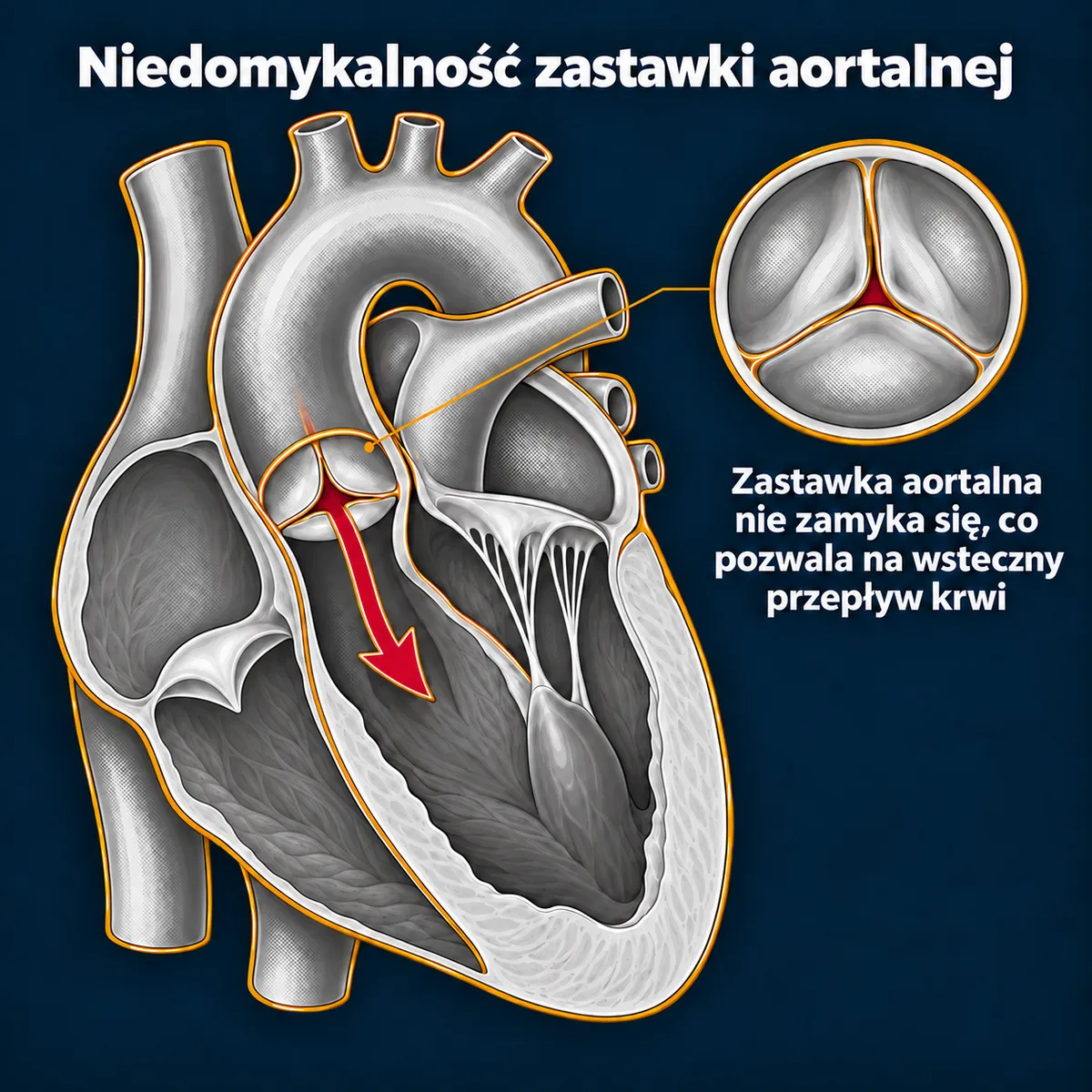
Causes: a bicuspid (two-leaflet) valve, widening of the aortic root and ascending aorta (regurgitation "from stretching"), previous infective endocarditis, connective tissue disorders (Marfan syndrome), and less often aortic dissection or inflammatory diseases.
Surgery is considered for patients with severe regurgitation who:
- have symptoms — breathlessness on exertion, fatigue, palpitations, chest pain;
- have no symptoms, but the left ventricle is enlarged or weakened — roughly: ejection fraction ≤ 50%, end-systolic diameter > 50 mm (or > 25 mm/m² of body surface area); the 2025 guidelines allow earlier surgery at smaller dimensions in centres experienced in valve repair;
- have an ascending aorta or aortic root that is widened to surgical thresholds (see the page on ascending aortic aneurysm) — in that case the valve is treated during the same operation;
- are scheduled for another heart operation.
Moderate regurgitation is monitored: echocardiography every 6–12 months and, in selected patients, cardiac MRI to measure ventricular volume precisely.
What it involves
The choice of method depends on the structure of the leaflets and the aortic root:
- Valve repair — if the leaflets are flexible and the cause of the defect is leaflet prolapse or a widened annulus, they can be stitched, shortened or stabilised with a ring. Repair preserves your own tissue, does not require anticoagulation and does not wear out like a biological prosthesis; it requires an experienced team, and not every valve is suitable.
- Valve-sparing aortic root replacement (David procedure, reimplantation) — when the cause is a widened aortic root but the leaflets are healthy: the root and ascending aorta are replaced with a vascular graft, and your own valve is sewn inside it. Most often in younger patients, including those with Marfan syndrome.
- Valve replacement — a biological or mechanical prosthesis, as in aortic stenosis; the same selection principles apply.
- Bentall procedure — simultaneous replacement of the valve, aortic root and ascending aorta with a composite graft (a valve sewn into a vascular graft), with re-implantation of the coronary artery openings; used when both the valve and the root need replacing.
Access: full sternotomy (aortic root operations) or mini-sternotomy (isolated valve surgery).
What happens
Admission the day before surgery; beforehand, a CT angiogram of the aorta is performed and, in patients over 40 or with risk factors, coronary angiography. The operation is performed under general anaesthesia with cardiopulmonary bypass and takes 3–5 hours (longer for aortic root operations). Intraoperative transoesophageal echocardiography assesses the result of the repair before the chest is closed. One day in intensive care, then the ward.
Typical hospital stay: 6–8 days.
Recovery
- Protect the breastbone for 6–8 weeks; the same rules apply as after any sternotomy.
- After repair or valve-sparing surgery: usually aspirin for a few months, without long-term anticoagulation. After a mechanical prosthesis: lifelong anticoagulation.
- Follow-up echocardiography before discharge, at 3 months, at one year, then regularly — after valve repair, follow-up is especially important, because a small recurrent leak is possible.
- Blood pressure control matters for the durability of the repair and the aortic graft; treatment is set by your doctor.
- Prevention of infective endocarditis before dental procedures.
Risks and alternatives
Approximate figures: perioperative death 1–3% for isolated valve surgery, 2–4% for aortic root operations in planned patients; stroke 1–2%; bleeding requiring re-operation 3–5%; pacemaker 2–5%. After valve repair, the risk of re-operation because of recurrent regurgitation is roughly 1–2% per year and depends on the original anatomy.
Alternatives: conservative treatment and monitoring — appropriate for moderate regurgitation or when the ventricle is normal; blood-pressure-lowering medicines may slow progression but do not replace surgery; TAVI — of limited use in pure regurgitation (there is no calcification for the prosthesis to anchor on), used only exceptionally in patients who cannot undergo surgery.
More on how the choice between surgery and a transcatheter procedure is made →
Questions
Why operate if nothing hurts?
Because irreversible damage to the left ventricle develops without symptoms. In this condition, ventricular dimensions and ejection fraction on echocardiography matter more than how you feel.
Is repair better than replacement?
When it is feasible and durable — yes: no prosthesis, no anticoagulation, and a lower risk of endocarditis. Not every valve is suitable for repair; the final decision is often made during the operation.
Does a bicuspid valve always need surgery?
No. It requires regular echocardiographic follow-up and assessment of the aorta; surgery is performed when the valve defect or aortic widening reaches the thresholds.
Do I need to take anticoagulants after a David procedure?
Usually not long-term; your own valve stays in place.
How long does an aortic graft last?
A synthetic vascular graft does not wear out; follow-up imaging concerns the remaining, non-operated aorta.